What Is A Stablecoin?
Stablecoins are a subset of the digital asset universe that are pegged to the value of a “stable asset”, for example commodities such as gold or fiat currencies like the US dollar or the Euro. Stablecoins are programmable digital currencies that bridge the world of crypto markets and traditional markets, enabling users to transfer value around the world at rapid speeds, ensuring users with price stability and low transaction fees without the need to use a ‘trusted intermediary’ such as a bank. Designed to mitigate crypto market volatility relative to unpegged cryptocurrencies like Bitcoin, a stablecoin's tethered-peg is built into the underlying asset's mechanism to store the user's value.
Stablecoins Solve Four Key Issues...
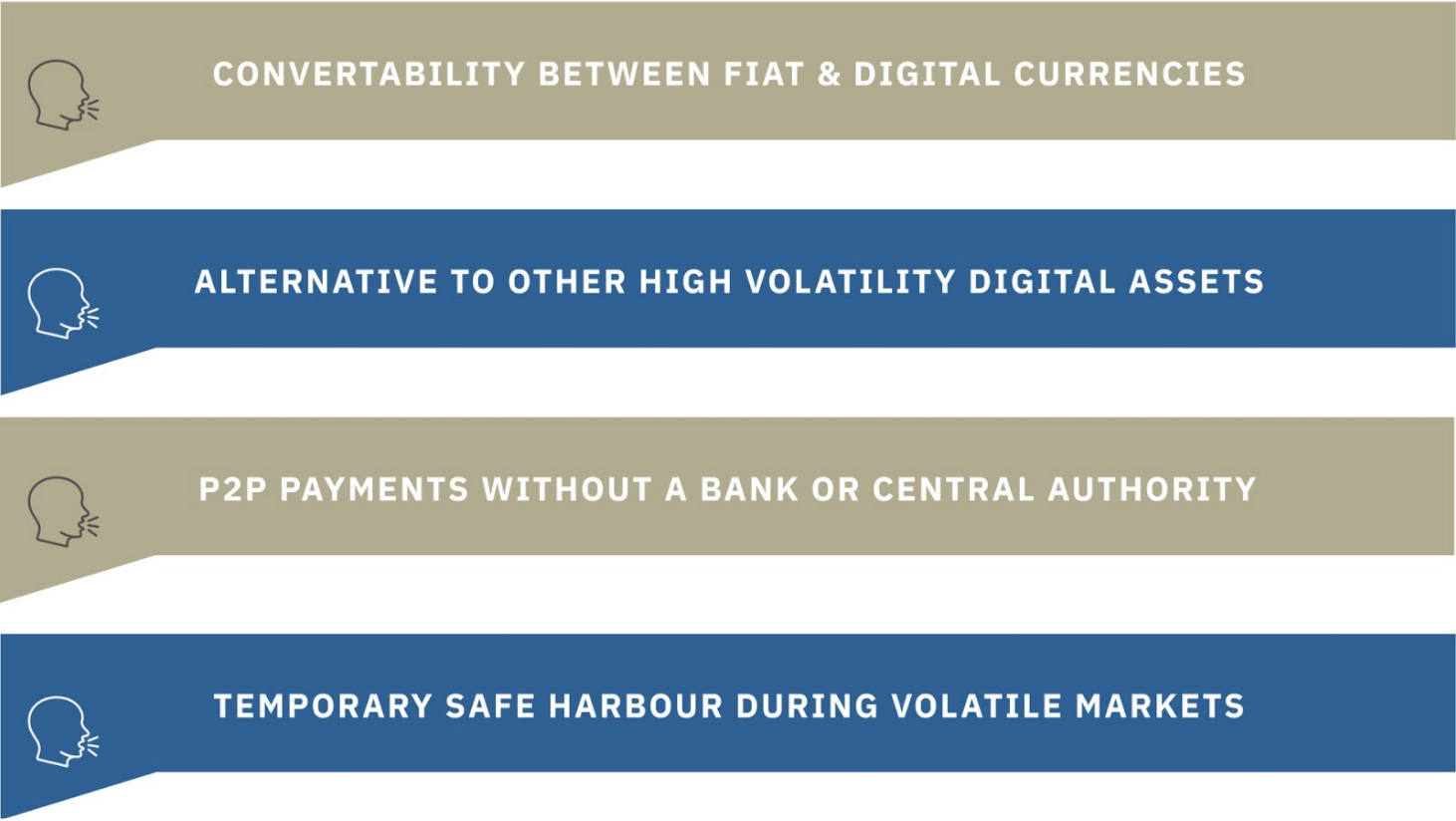
Cryptocurrencies like Bitcoin and Ethereum are incredibly volatile when priced against fiat currencies. This is due to crypto being a nascent industry with a significantly smaller amount of market participants compared to traditional markets. Stablecoins can dramatically reduce the user's exposure to crypto market volatility, resulting in a form of digital currency that is much more convenient for day-to-day payments, settlements and movement of funds between exchanges. They can also serve as a temporary safe harbour for crypto traders looking for some respite from high crypto volatility or looking to take profit. Stablecoins mitigate this risk by backing every token on a 1:1 basis against a stable reserve asset or fiat currency thereby minimising price volatility.
Stablecoins or digital currencies are minted through various methods and there are several ways in which a stablecoin can maintain price stability. In this explainer, we'll explore some of the core mechanisms and structures that stablecoins use within the worlds of CeFi (Centralised Finance) and DeFi (Decentralised Finance).